Food Processor Buying Guide (2026): 7 Essential Things to Consider Before You Buy
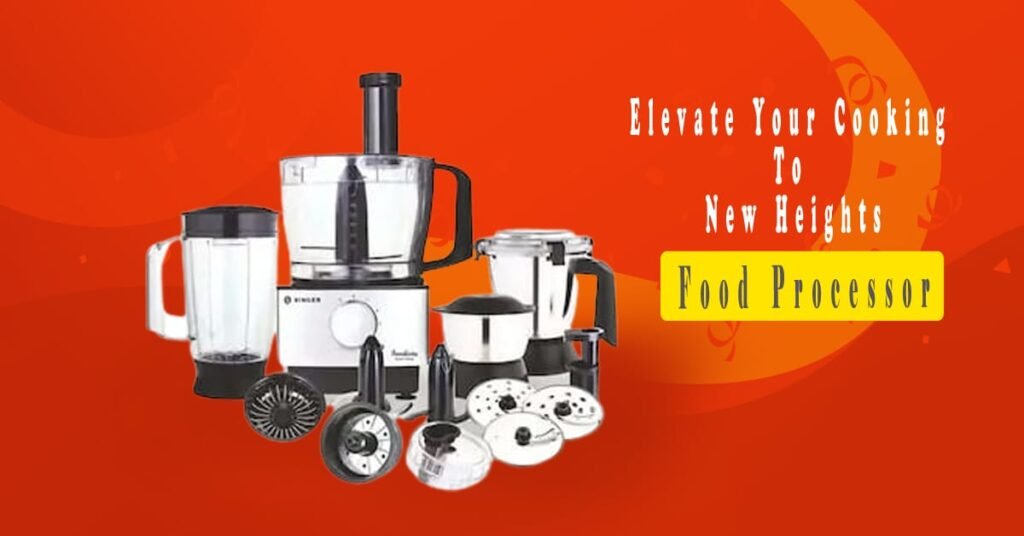
If you have a little extra to spend, you can easily buy the food processor of your choice. It is quite useful and a time saver for those who do not have a helping hand, have to do all the cooking themselves and often have to chop onions, garlic, and vegetables in large quantities.
From making bread dough, whipped cream to chopping all kinds of curries, chopping vegetables, any dry spice powder, wet spice paste, juice, smoothies, bread crumbs, almond paste, lentil batter, rice batter, rice powder, minced meat, fish paste, various chutneys, tomato sauce, cake batter mix, cold coffee, milkshakes, pancakes, baby food, etc., all the food preparation processes are done in a few seconds in this one machine.
Choosing the right food processor can be difficult, as there are so many models on the market. It’s natural to get confused by the size of the bowl, the power of the motor, and the various components. Buying the wrong model could end up with an appliance that may not suit your cooking style or household needs.
However, this detailed guide will clear up your doubts and explain everything you need to know before buying a food processor. You’ll learn how to compare important features, understand which specifications are most important, and avoid common mistakes when buying. By the end of this guide, you’ll be able to choose a model that best suits your budget and cooking habits.
What Is a Food Processor?
A food processor is an electrical kitchen appliance designed to make your daily food preparation easier. It does not perform any specific function, but rather is capable of performing multiple functions using different blades and discs.
Depending on the model, it can:
- Chop onions, garlic, herbs, and vegetables
- Slice potatoes, cucumbers, and other vegetables
- Shred cheese and cabbage
- Mix cake batter
- Knead bread and pizza dough
- Grind nuts and breadcrumbs
- Prepare hummus, salsa, pesto, and dips
- Blend ingredients for various recipes
- Dry spice powder
- Wet spice paste
- Prepare baby food
Because it combines multiple functions into one appliance, a food processor reduces preparation time and helps achieve consistent results.
Why Buy a Food Processor?
If you cook at home regularly, and you don’t have a helping hand, a food processor can become your most reliable friend among other kitchen appliances.
Saves Time
Tasks that normally take 15–20 minutes by hand—such as chopping vegetables or shredding cheese—can often be completed in just a few minutes.
Consistent Results
Uniform slices and evenly chopped ingredients help recipes cook more consistently and improve presentation.
Versatile Appliance
Instead of buying several separate gadgets, one food processor can replace multiple kitchen tools for many common tasks.
Encourages Home Cooking
When food preparation becomes quicker and easier, you’re more likely to cook fresh meals at home rather than relying on processed or takeaway food. Other members of your household who are new to the kitchen will also be encouraged to cook using it.
Suitable for Different Skill Levels
Whether you’re a beginner learning basic recipes or an experienced home cook preparing elaborate meals, a food processor can make kitchen work more efficient.
Food Processor vs Blender: What’s the Difference?
Many people confuse these two appliances because they both use rotating blades. However, they are designed for different purposes.
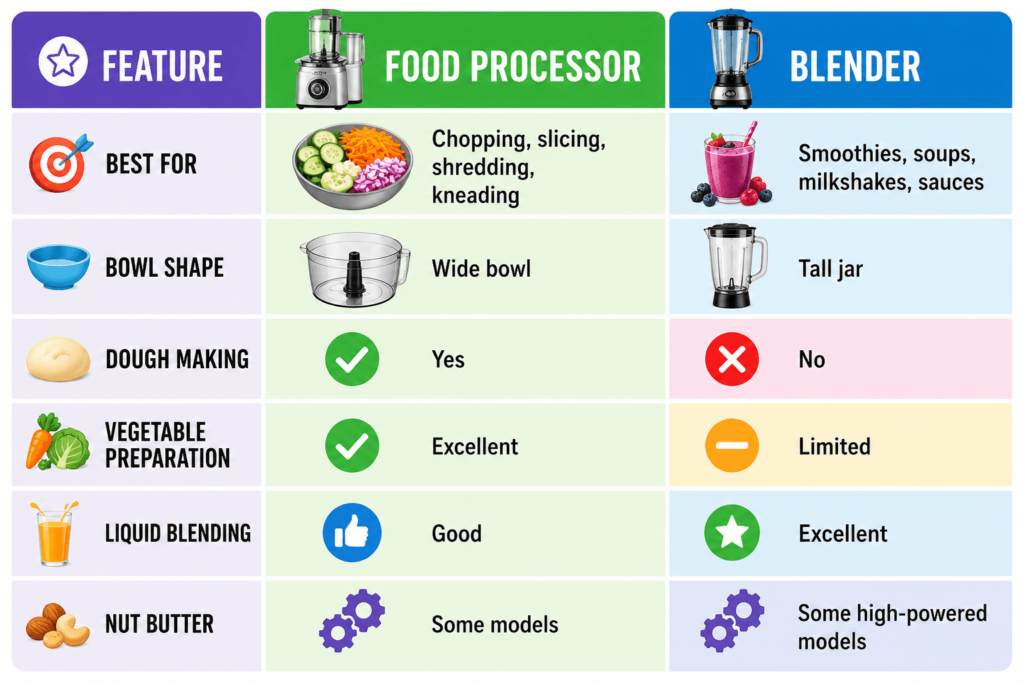
Choose a Food Processor If You:
- Prepare vegetables frequently.
- Bake bread or pizza.
- Want to save time during meal preparation.
- Need one appliance for multiple food preparation tasks.
Choose a Blender If You:
- Make smoothies every day.
- Blend soups and sauces.
- Crush ice regularly.
- Prepare protein shakes.
Many kitchens benefit from having both appliances, as each excels at different tasks.
If you’re unsure whether a food processor is the right appliance for your kitchen, check out our Food processor vs Blender comparison to understand which one best suits your cooking needs.
1. Motor Power: The Heart of the Machine
A food processor’s motor plays a key role in how efficiently it handles various ingredients.
While lower-powered machines may work well for soft vegetables or herbs, tougher tasks such as kneading dough or grinding nuts require a stronger motor.
As a general guide:
- 300–500 watts: Suitable for light food preparation.
- 500–800 watts: Good for most households.
- 800 watts and above: Better for frequent cooking, larger batches, and heavier ingredients.
Instead of focusing only on the highest wattage, consider how often you’ll use the appliance and the types of food you typically prepare.
Buying Tip: If you often prepare dough, nuts, or large quantities of vegetables, investing in a more powerful motor can improve performance and durability.
2. Bowl Capacity: Choose the Right Size
Bowl size affects how much food you can prepare at one time.
The right capacity lets you prepare ingredients in fewer batches, saving both time and effort.
Small (1–2 Litres)
Ideal for:
- Singles
- Couples
- Small kitchens
- Basic chopping tasks
Medium (2–3 Litres)
Suitable for:
- Families of three to five people
- Everyday meal preparation
- Most home cooks
Large (3 Litres or More)
Best for:
- Large families
- Batch cooking
- Entertaining guests
- Preparing dough
Remember that larger bowls also require more storage space, so consider your kitchen layout before making a decision.
3. Attachments and Blades
The included accessories determine how versatile a food processor will be.
Common attachments include:
Chopping Blade
The standard blade used for vegetables, fruits, herbs, nuts, and meat.
Slicing Disc
Produces even slices for vegetables, fruits, and potatoes.
Shredding Disc
Perfect for cheese, cabbage, carrots, and vegetables used in salads.
Dough Blade
Designed for mixing and kneading bread, pizza, and pastry dough.
Whisk Attachment
Available on some premium models for whipping cream or mixing lighter batters.
When comparing products, don’t just count the number of accessories—consider whether you’ll actually use them in your regular cooking.
4. Speed Settings and Controls
Different ingredients require different processing speeds.
Having multiple speed options provides greater control and helps achieve better results.
Low Speed
Best for:
- Herbs
- Soft vegetables
- Gentle mixing
Medium Speed
Ideal for:
- Cheese
- Slicing vegetables
- Preparing salads
High Speed
Useful for:
- Hard vegetables
- Nuts
- Thick mixtures
- Dough preparation
Pulse Function
The pulse button gives short bursts of power, making it easier to avoid over-processing ingredients. This is especially useful when chopping onions, garlic, or herbs where texture matters.
Simple, clearly labelled controls are often more convenient than overly complex digital interfaces, particularly if several family members will use the appliance.
5. Safety Features You Should Never Ignore
Safety should be a key consideration when buying a food processor, yet it is often overlooked. A powerful motor and sharp blades make this appliance incredibly efficient, but they also require proper safety mechanisms.
Look for these essential safety features:
Locking Lid System
A good food processor should not start unless the bowl and lid are securely locked. This prevents accidental operation and protects users from injury.
Non-Slip Rubber Feet
A food processor with non-slip rubber feet stays stable during use, particularly when kneading dough or processing dense ingredients.
Overload Protection
Some food processors automatically switch off if the motor overheats or becomes overloaded. This feature helps extend the appliance’s lifespan and protects the motor from damage.
BPA-Free Bowl
Most reputable manufacturers now use BPA-free plastic bowls, making them safer for preparing food.
Buying Tip: Never compromise on safety features to save a small amount of money. They improve both durability and peace of mind.
6. Easy Cleaning and Maintenance
A food processor should save time—not create extra work.
Cleaning is one of the biggest reasons some people stop using their appliance regularly. Choosing a model that’s easy to clean makes a noticeable difference.
Look for these features:
- Dishwasher-safe bowl and lid
- Removable stainless-steel blades
- Smooth surfaces that don’t trap food
- Easy-to-remove accessories
- Minimal crevices where food can collect
Cleaning Tips
To keep your food processor in excellent condition:
- Wash the bowl immediately after use.
- Dry all parts thoroughly before storage.
- Avoid using abrasive scrubbers on plastic bowls.
- Sharpen or replace blades when they become dull.
- For safe cleaning, never put the motor base in water; just wipe it down with a damp cloth.
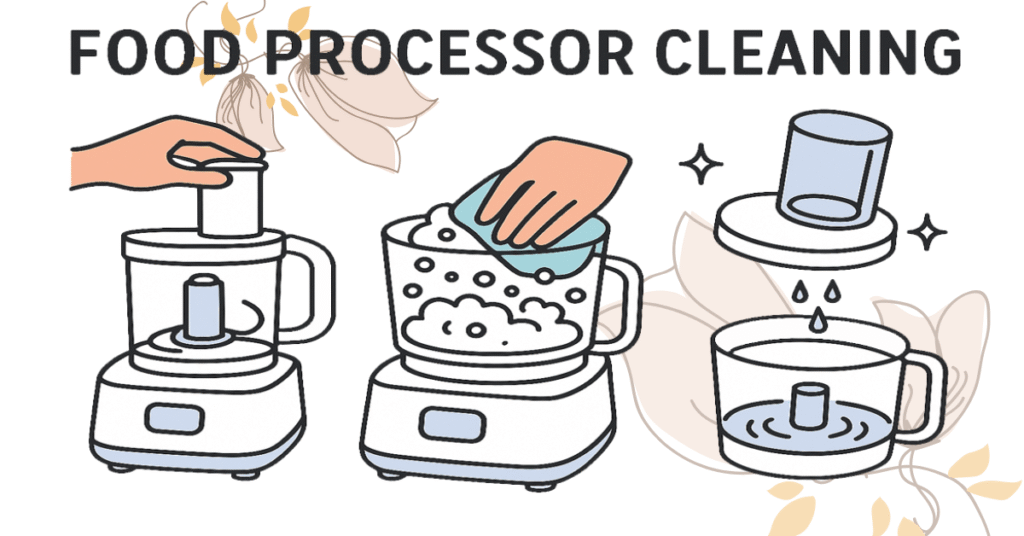
Proper maintenance not only keeps your appliance performing well but also helps it last longer. Follow our guide on how to clean a food processor to keep it performing like new.
7. Design, Size, and Storage
While performance is important, the overall design also affects everyday usability.
Consider Your Kitchen Space
Before buying, measure the available space on your countertop and inside your cabinets.
Compact food processors are ideal for:
- Small kitchens
- Apartments
- Limited storage
Larger models are better suited for families who use them frequently.
Cord Storage
Some food processors include built-in cord storage, helping keep your countertop tidy.
Feed Tube Size
The wide feed tube lets you process larger vegetables without chopping them into smaller pieces first, making preparation quicker and easier.
Build Quality
Food processors with stainless-steel finishes are generally more durable and easier to maintain than models made entirely from plastic.
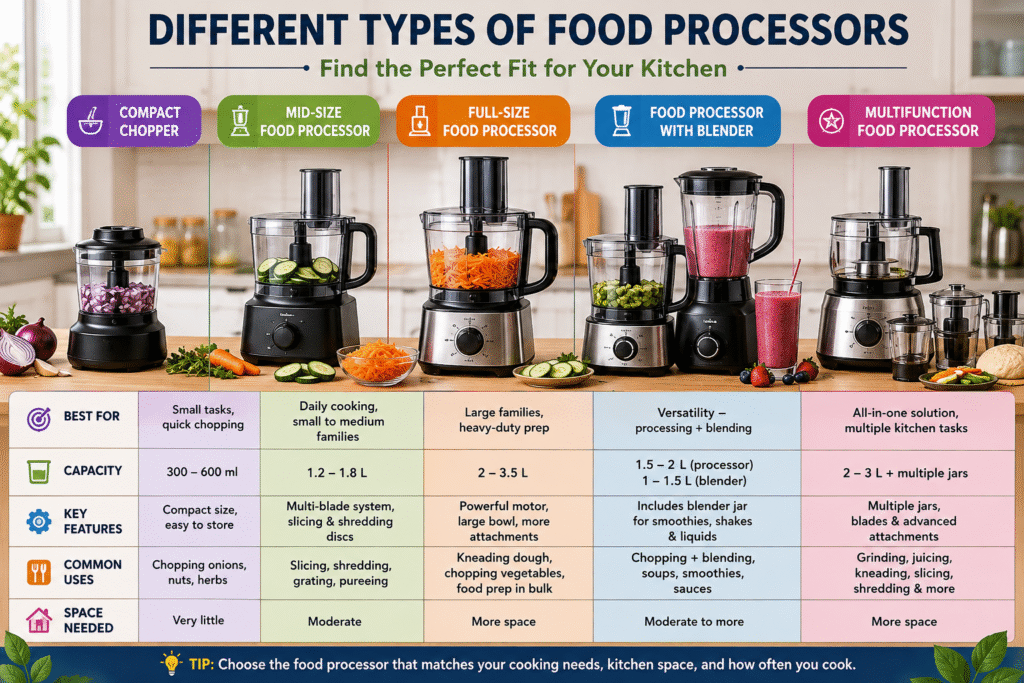
Types of Food Processors
Not every food processor is designed for the same purpose.
Understanding the different types helps you choose the one that best matches your cooking habits.
Mini Food Processors
These compact models are perfect for:
- Chopping herbs
- Garlic
- Small quantities of vegetables
- Baby food
Best for:
- Singles
- Couples
- Small kitchens
Full-Size Food Processors
These are the most versatile option.
Suitable for:
- Daily cooking
- Dough preparation
- Vegetable slicing
- Cheese shredding
- Large meals
Best for:
- Most households
Multi-Function Food Processors
Premium models often combine several appliances into one.
They may include:
- Blender jar
- Citrus juicer
- Dough kneading attachment
- Food chopper
- Grinder
- Whisk
Although they cost more, they can replace several separate kitchen appliances.
Common Mistakes People Make When Buying a Food Processor
Avoid these common buying mistakes.
Buying Only Based on Price
Budget models often compromise on power and durability, making them less suitable for regular use.
Instead, compare features and long-term value.
Choosing the Wrong Bowl Size
A bowl that’s too small means processing food in several batches.
A bowl that’s too large may be unnecessary if you cook only for one or two people.
Ignoring Attachments
Many buyers never check which accessories are included.
Extra blades and discs significantly increase versatility.
Overlooking Warranty
Choose brands that provide reliable customer support and a good warranty.
A longer warranty usually means the manufacturer has more confidence in the product’s quality.
Forgetting About Noise
Powerful motors can be noisy.
If you frequently cook early in the morning or late at night, consider models designed for quieter operation.
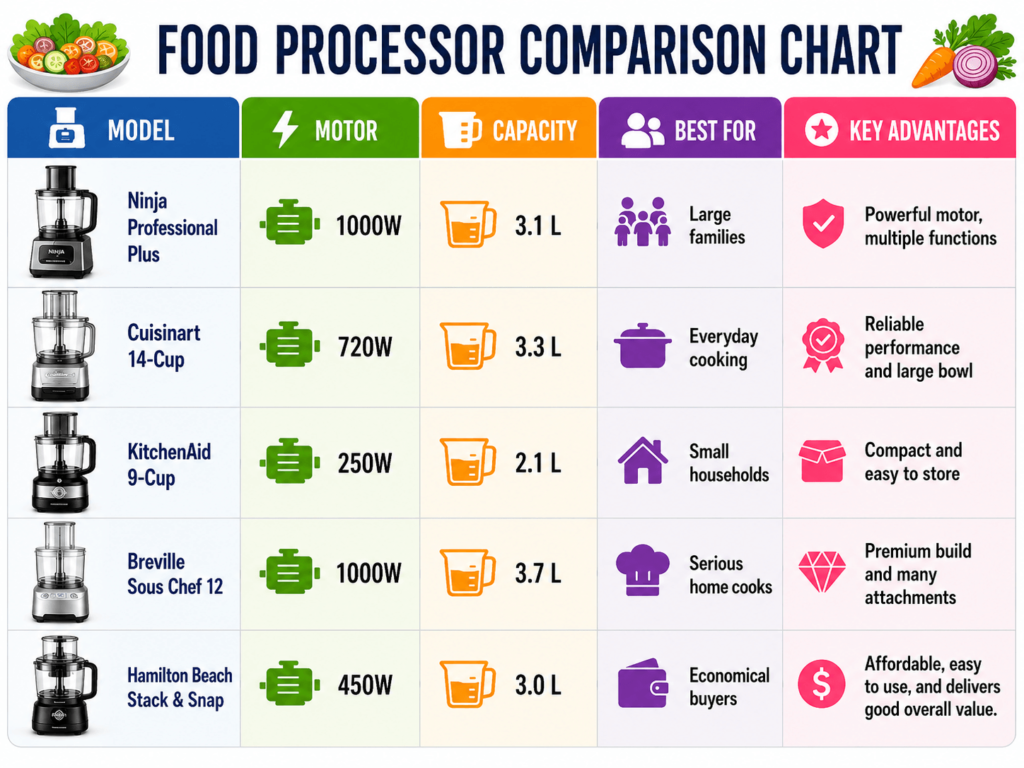
Comparison Table: Popular Food Processors
The following table compares several well-known food processors to help you understand the differences in features and intended use.
Which Food Processor Should You Choose?
The best choice depends on your cooking habits.
Choose a Budget Model If:
- You cook occasionally.
- You need basic chopping and slicing.
- You have limited kitchen space.
Choose a Mid-Range Model If:
- You cook several times a week.
- You prepare meals for a family.
- And you also want a fair price with the right features
Choose a Premium Model If:
- You bake regularly.
- You prepare dough often.
- You enjoy experimenting with recipes.
- Choose a food processor that gives you the best value for your money.
Remember that a higher price does not always guarantee the best performance or value. The right food processor is the one that matches your cooking style, household size, and budget. When purchasing an appliance in India, look for products that meet recognized quality standards from the Bureau of Indian Standards (BIS)
Frequently Asked Questions (FAQs)
1.What is the ideal motor power for a food processor?
For everyday home cooking, a food processor with 500–800 watts of power is usually sufficient. If you frequently knead dough, grind nuts, or process hard vegetables, consider a model with 800 watts or more for better performance and durability.
2. What bowl size should I choose?
The size of the bowl will depend on the number of members in your family and your family’s cooking needs.
- 1–2 litres: Singles or couples
- 2–3 litres: Average families
- 3 litres or more: Large families or batch cooking
Choosing the right size helps reduce preparation time and prevents processing food in multiple batches.
3. Can a food processor replace a blender?
Not completely.
A food processor excels at chopping, slicing, shredding, mixing, and kneading dough, while a blender is better suited for smoothies, soups, milkshakes, and other liquid-based recipes.
If your budget allows, having both appliances provides maximum flexibility in the kitchen.
4. Can a food processor knead bread dough?
Yes. Many medium and high-powered food processors include a dough blade specifically designed for kneading bread, pizza, and pastry dough.
Always check the manufacturer’s recommendations before processing heavy dough.
5. Is a food processor worth buying?
If you cook regularly, the answer is usually yes.
If you don’t have a helping hand in the kitchen during your busy daily routine, a good quality food processor can save you time, reduce manual labor, and help you prepare ingredients more consistently. A food processor makes it easier to prepare fresh vegetables, homemade sauces, and nutritious meals. The World Health Organization recommends eating plenty of fruits and vegetables as part of a healthy diet. It’s particularly useful for meal prep, baking, and making homemade dips, sauces, and salads.
6. How long does a food processor last?
A well-maintained food processor from a reputable brand can last 5–10 years or more, depending on usage.
Cleaning the appliance after each use and avoiding motor overload can significantly extend its lifespan.
7. What accessories are most useful?
The most practical accessories include:
- Stainless-steel chopping blade
- Slicing disc
- Shredding disc
- Dough blade
- Citrus juicer attachment (optional)
The included attachments enhance versatility, allowing one appliance to complete multiple food preparation functions.
8. How do I clean a food processor safely?
Always unplug the appliance before cleaning. You can also follow general kitchen appliance safety recommendations from the Consumer Product Safety Commission.
Wash removable parts with warm, soapy water or place dishwasher-safe components in the dishwasher. Never try to wash the motor base by submerging it in water. Always wipe it clean with a lightly damp cloth, wringing it out well.
Quick Food Processor Buying Checklist
Before purchasing, ask yourself these questions:
✅ Is the motor powerful enough for my cooking needs?
✅ Does the bowl capacity suit my household?
✅ Are the blades made from durable stainless steel?
✅ Does it include the attachments I’ll actually use?
✅ Is it easy to clean?
✅ Does it have safety features such as a locking lid and non-slip feet?
✅ Will it fit comfortably in my kitchen?
✅ Does the manufacturer offer a good warranty and reliable customer support?
If you can answer “yes” to most of these questions, you’re likely choosing a food processor that will serve you well for years.
Final Verdict
A food processor is one of the most useful kitchen appliances for home cooking. It can chop vegetables, slice fruits, grate cheese, knead dough, and even make baby food. It makes food preparation quicker and easier.
Before buying one, don’t just pick the first model you find. Take a few minutes to compare important features like motor power, bowl size, blade quality, attachments, how easy it is to clean, and safety features. Your money will only be worth it if you choose the right model for you that will also meet your cooking needs.
Whether you’re just starting to cook or you prepare meals for a busy family every day, a good food processor can quickly become one of the most useful appliances in your kitchen.